A shaded-pole motor, also called a shaded-pole electric motor, is a type of single-phase AC motor, typically using a squirrel-cage cast aluminum rotor with skewed slots. Depending on the stator's shape and structure, it is further divided into salient-pole and non-salient-pole shaded-pole motors.
Why are shaded-pole motors widely used in household appliances?
A shaded-pole motor, also called a shaded-pole electric motor, is a type of single-phase AC motor, typically using a squirrel-cage cast aluminum rotor with skewed slots. Depending on the stator's shape and structure, it is further divided into salient-pole and non-salient-pole shaded-pole motors.
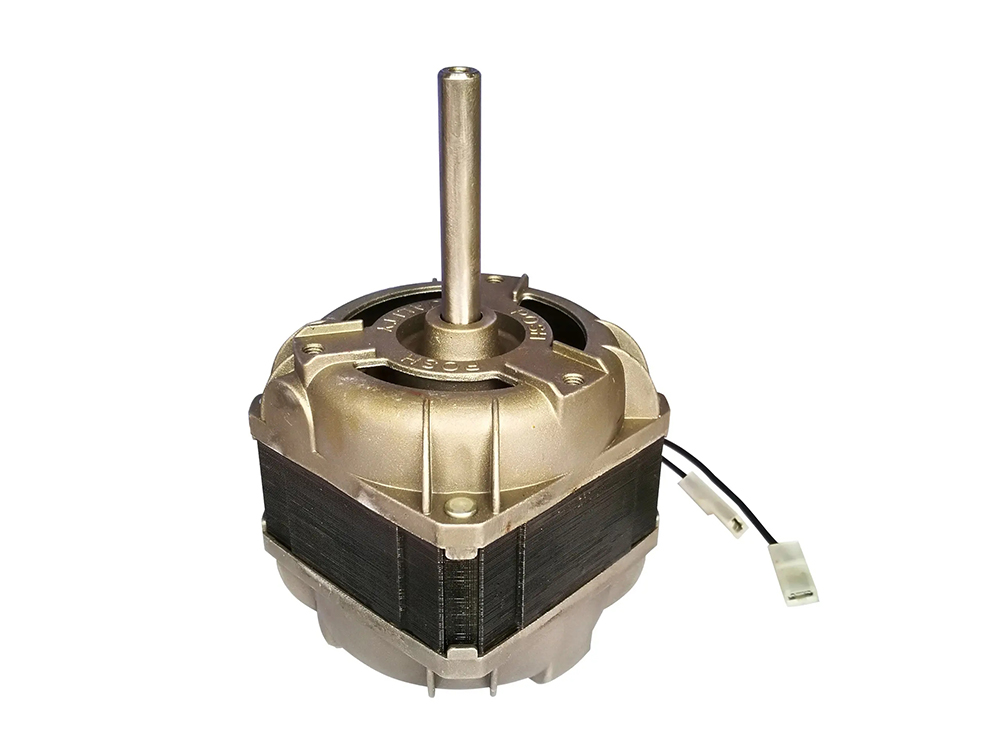
The significant characteristics of shaded-pole motors are their very simple structure, the absence of centrifugal switches, high power losses, low power factor, and low starting torque. They are designed to maintain a small size and have low power ratings. The motor speed is as precise as the frequency of the power supply applied to it, and these motors are often used to drive clocks. Shaded-pole motors rotate only in one specific direction; reverse rotation is impossible. The losses generated by the shaded-pole coils result in lower motor efficiency, but their simple structure makes them widely used in household fans and other small-capacity appliances.
Shaded-pole Motor Working Principle
A shaded-pole motor is a single-phase AC induction motor. Its auxiliary winding consists of copper rings called shaded-pole coils. The current in the coils delays the phase of the magnetic flux at the poles to provide a rotating magnetic field. The direction of rotation is from the non-shaded pole to the shaded-pole rings.
In a shaded-pole motor, the rotor is placed in a simple C-shaped core. Half of each pole is covered by a shaded-pole coil. When an alternating current passes through the power supply coil, a pulsating magnetic flux is generated. When the magnetic flux through the shaded coil changes, a voltage and current are induced in the shaded-pole coil, corresponding to the change in magnetic flux from the power supply coil. Therefore, the magnetic flux under the shaded-pole coil lags behind the magnetic flux in the rest of the coil. This small rotation of the rotor in the magnetic flux causes the rotor to rotate. The figure below shows the magnetic flux lines obtained using finite element analysis.
Shaded-pole motor operating characteristics:
1. Reasonable structural design, flexible lead wire direction, and the shaded-pole motor junction box itself can be rotated for installation.
2. Superior shaded-pole motor performance: low noise, low vibration, and high-performance protection level.
3. Numerous options to meet various user needs: thermistor can be added.
4. Optimized design, high efficiency, and considerable energy-saving effect.
5. Various requirements can be met by adding dustproof sealing rings, heating belts, oil-proof sealing rings, oil filling, special shaft extensions, special flanges, etc.


